


- Home
- About
- Criminal Defense
- DWI
- Drug Crimes
- Violent Crimes
- Assault
- Assault Public Servant
- Aggravated Assault
- Domestic Violence
- Assault Family Violence
- Assault by Impeding Breath or Circulation
- Continuous Violence Against the Family
- Orders of Protection / Violation of Protective Order
- Robbery / Carjacking
- Child Abuse / Endangerment
- Injury to a Child / Elderly
- Indecency With a Child
- Indecent Assault
- Indecent Exposure
- Public Lewdness
- Terroristic Threat
- Deadly Conduct
- Murder / Manslaughter
- Kidnapping / Unlawful Restraint
- Sex Crimes
- Weapons Crimes
- Property Crimes
- Traffic Violations
- Revocation of Probation
- Failure to ID
- Resisting Arrest
- Evading Arrest
- Juvenile Crimes
- Engaging in Organized Criminal Activity
- Pre-Arrest and Investigations
- Immigration
- Personal Injury
- Other Practice Areas
- Scholarship
- Testimonials
- Blog
- Courthouses
- Contact
Recent Blog Posts
Texas Sheriffs Must Work With ICE: What It Means Now
 While many immigrants assume that a local arrest is separate from immigration enforcement, in the state of Texas, this is no longer a safe assumption. New requirements mean that county sheriffs must cooperate with ICE, increasing the chances that a relatively minor arrest can turn into an immigration nightmare.
Texas Senate Bill 8 goes into effect on January 1, 2026. This bill requires local sheriffs to work with federal immigration authorities, changing how local arrests can affect immigration status. For immigrants and mixed-status families, this new law increases the risk that a routine jail booking could quickly escalate into ICE involvement.
A simple traffic stop or a minor shoplifting charge can cause a total upheaval for Texas families – even those who have been here for decades. With sheriffs now required to work with ICE, families now face increased levels of fear and uncertainty. An experienced Grand Prairie, TX immigration lawyer can help you determine the best ways to potentially keep you and your family from ending up as ICE statistics.
Delitos Económicos en Texas y Su Impacto en Personas No Ciudadanas
 Los delitos económicos suelen considerarse "no violentos" y, por lo tanto, menos graves. Aunque esto puede ser cierto en algunos casos, para las personas no ciudadanas que viven en Texas, los cargos penales por delitos de naturaleza económica pueden acarrear en realidad las consecuencias migratorias más severas. Los delitos que implican fraude, engaño o pérdidas financieras pueden resultar en deportación, detención obligatoria por ICE, negación de la naturalización, revocación de visa y pueden incluso impedir que la persona regrese a los Estados Unidos.
Las personas no ciudadanas, incluidos residentes permanentes, titulares de visas, beneficiarios de DACA e individuos indocumentados, deben comprender lo que está en juego antes de tomar cualquier decisión en un caso penal. Hablar con un abogado de inmigración en North Richland Hills, TX que también practique derecho penal es el mejor paso que puede tomar si enfrenta cargos criminales.
Texas White Collar Crimes and Their Impact on Non-Citizens
 White-collar crimes tend to be thought of as "non-violent" and, therefore, less serious. While this is true in some cases, for non-citizens living in Texas, white-collar criminal charges may actually carry the harshest immigration consequences. Crimes involving fraud, deception, or financial loss can result in deportation, mandatory detention, denial of naturalization, visa revocation, and may bar the individual from returning to the United States.
Non-citizens, including permanent residents, visa holders, DACA recipients, and undocumented individuals, must understand what is at stake before making any decisions in a criminal case. Speaking to an experienced North Richland Hills, TX immigration attorney who also practices criminal law is the best step you can take if you are facing criminal charges.
What Are Some Common White-Collar Crimes That Can Trigger Immigration Issues?
There are many different white-collar crimes, but some of the more common ones include:
Posesión de armas de fuego por no ciudadanos en Texas: riesgos legales
 Aunque Texas es conocido por sus generosos derechos de armas, estos no se extienden por igual a los inmigrantes indocumentados, ni siquiera a los residentes legales. De hecho, quienes no son ciudadanos podrían enfrentar graves consecuencias legales por la posesión o compra de armas de fuego. La ley estatal de Texas penaliza la posesión por parte de ciertos no ciudadanos, mientras que la ley federal prohíbe la posesión de armas de fuego a cualquier persona que se encuentre "ilegalmente" en Estados Unidos.
Un arresto puede resultar tanto en un proceso judicial estatal como en una detención por parte de ICE, mucho antes de una condena. Es crucial comprender la confluencia entre las leyes de armas de fuego de Texas y las normas federales de inmigración, y cómo un abogado de inmigración con experiencia en Weatherford, Texas y con experiencia en derecho penal puede ayudarle si se encuentra ante esta compleja superposición.
Firearm Possession by Noncitizens in Texas: Legal Risks
 Although Texas is well known for generous gun rights, those rights do not extend equally to illegal immigrants, even lawful residents. In fact, non-citizens could face severe legal consequences for possession or purchase of firearms. Texas state law criminalizes possession by certain noncitizens, while federal law prohibits firearm ownership by anyone who is "illegally or unlawfully" in the United States.
An arrest can lead to both state prosecution and ICE detention, long before a conviction. It is crucial to understand the intersection of Texas firearm laws and federal immigration rules, and how an experienced Weatherford, TX immigration lawyer with expertise in criminal law can assist you if you find yourself facing this complex overlap.
How Federal Law and Texas Law Overlap
Texas Penal Code Sections 46.04 and 46.06 discuss the illegal transfer or possession of firearms by "prohibited persons," which includes undocumented immigrants. Texas does not require proof of intent to violate federal law, only possession while undocumented or in the United States on certain visas. Federal law 18 U.S.C. Section 922(g)(5) bars possession of a firearm by anyone who is unlawfully in the United States or who has been admitted on a non-immigrant visa. There are very narrow hunting/sporting exceptions to these laws.
I-601 vs I-601A: What Texans Should Know Before Applying
 If you are applying for a green card or other type of immigration benefit, you may have hit a major roadblock in the form of inadmissibility. There are two possible waivers available that can sometimes help overcome grounds of inadmissibility. The I-601 Waiver of Inadmissibility and the I-601A Provisional Unlawful Presence waivers serve different purposes, have different eligibility requirements, and follow different timelines.
Accidentally choosing the wrong waiver could potentially delay your case or jeopardize your ability to remain with your loved ones. If you are considering filing one of these waivers, it is important that you seek legal advice from an experienced Arlington, TX immigration lawyer. This will ensure you have chosen the right waiver for your situation and that the paperwork is complete.
Can Silence Ever Be Interpreted as Consent Under Texas Law?
 At the core of virtually every sexual assault law – including in Texas – is the issue of consent. What constitutes consent? We often see in movies and television shows that one party’s silence can be construed as a form of agreement or consent. In real life, however, such an assumption can be legally dangerous.
Under Texas law, sexual consent must be affirmatively given, whether verbally or through body language; lack of resistance, failure to say "no," or silence does not establish lawful consent. Misunderstandings about silence being taken for consent are more common than you might think and can lead to serious criminal charges. Juries, defense attorneys, and prosecutors face the challenge of interpreting words, actions, context, and circumstances in sexual assault charges.
If you are facing sexual assault charges and you believe there was consent, it is essential to know what evidence a Texas court will consider in disputed cases. A Grand Prairie, TX criminal defense lawyer can help ensure you receive a comprehensive, solid defense that will protect your rights and your future to the extent possible.
How a Shoplifting Charge Could Affect Your Immigration Status
 New immigration laws have vastly changed the immigration landscape across the United States. If you are a non-citizen facing a shoplifting charge, the consequences could potentially go far beyond a simple fine or even a few days in jail. While shoplifting is generally considered a minor offense, it can have serious immigration consequences, including delays in obtaining a green card, visa denials, or even deportation.
Whether you are a lawful permanent resident, a DACA recipient, or an undocumented immigrant, it is extremely important to understand how a shoplifting charge (Texas Penal Code Title 7, Chapter 31) could jeopardize your ability to remain in the United States. An experienced Grand Prairie, TX immigration lawyer who also practices criminal law is your best hope for a positive outcome in this situation.
How State or Federal Criminal Charges Affect Immigration Status
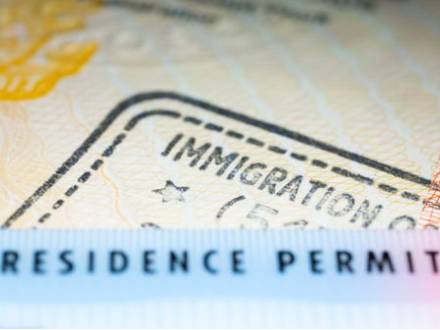 Regardless of where you live in the country, you are probably very aware of the changes that are happening in immigration. While it is never a good thing to be charged with a criminal offense, when an undocumented immigrant is charged with a crime, his or her situation immediately becomes very precarious.
When a non-citizen is even accused of a criminal offense, his or her legal status is immediately in jeopardy and may be a major consideration in how the case is handled. A non-citizen can be placed in removal proceedings, which may lead to deportation. Even if the criminal charge is ultimately dismissed, the immigration consequences remain. It can be extremely beneficial to have a criminal defense attorney who also practices immigration law.
Your defense attorney will understand exactly how the criminal charges will affect your immigration status and will know whether there are options that can stall or prevent deportation while dealing with the underlying criminal charges. Part of this process involves whether you are being charged federally or by the state of Texas. The best step you can take during such a difficult time is to speak to a North Richland Hills, TX immigration lawyer.
Where Do DACA Recipients in Texas Stand?
 On March 11, 2025, the U.S. Court of Appeals for the Fifth Circuit found at least some portions of the Deferred Action for Childhood Arrivals (DACA) to be unlawful. The Court found that DACA is not consistent with the federal Immigration and Nationality Act, while also limiting the effect of this ruling. The changes to DACA were only for the state of Texas; the current DACA program remains in place in every state as the judicial appeals process continues.
At least for now, DACA recipients in Texas can renew their DACA as they normally do. They are also still protected from deportation in Texas. However, the Fifth Circuit also found that work authorization is not a lawful part of DACA. (DACA recipients in states other than Texas still have work authorization.)









Get In Touch Today
If you have any questions about the legal services we offer, reach out to us and we will be in touch.

300 Burnett St. #145
Fort Worth, TX 76102
P 817-732-6392
F 817-704-4476
E edwardo@mezalawfirm.com


From our office in Fort Worth, Texas, The Meza Law Firm, PLLC provides legal help to clients in the surrounding communities, including Arlington, Azle, Bedford, Benbrook, Burleson, Colleyville, Crowley, Euless, Flower Mound, Forest Hill, Grand Prairie, Grapevine, Haltom City, Hurst, Keller, Kennedale, Mansfield, North Richland Hills, Richland Hills, River Oaks, Saginaw, Southlake, Watauga, Weatherford, and White Settlement.
Results listed are not a guarantee or indication of future case results.


