


- Home
- About
- Criminal Defense
- DWI
- Drug Crimes
- Violent Crimes
- Assault
- Assault Public Servant
- Aggravated Assault
- Domestic Violence
- Assault Family Violence
- Assault by Impeding Breath or Circulation
- Continuous Violence Against the Family
- Orders of Protection / Violation of Protective Order
- Robbery / Carjacking
- Child Abuse / Endangerment
- Injury to a Child / Elderly
- Indecency With a Child
- Indecent Assault
- Indecent Exposure
- Public Lewdness
- Terroristic Threat
- Deadly Conduct
- Murder / Manslaughter
- Kidnapping / Unlawful Restraint
- Sex Crimes
- Weapons Crimes
- Property Crimes
- Traffic Violations
- Revocation of Probation
- Failure to ID
- Resisting Arrest
- Evading Arrest
- Juvenile Crimes
- Engaging in Organized Criminal Activity
- Pre-Arrest and Investigations
- Immigration
- Personal Injury
- Other Practice Areas
- Scholarship
- Testimonials
- Blog
- Courthouses
- Contact
Can Silence Ever Be Interpreted as Consent Under Texas Law?
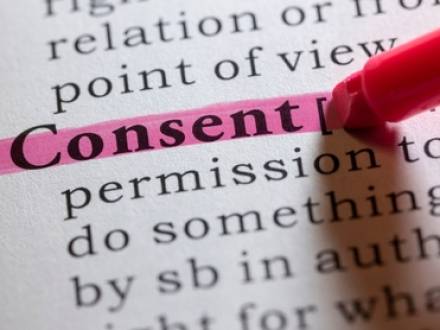 At the core of virtually every sexual assault law – including in Texas – is the issue of consent. What constitutes consent? We often see in movies and television shows that one party’s silence can be construed as a form of agreement or consent. In real life, however, such an assumption can be legally dangerous.
Under Texas law, sexual consent must be affirmatively given, whether verbally or through body language; lack of resistance, failure to say "no," or silence does not establish lawful consent. Misunderstandings about silence being taken for consent are more common than you might think and can lead to serious criminal charges. Juries, defense attorneys, and prosecutors face the challenge of interpreting words, actions, context, and circumstances in sexual assault charges.
If you are facing sexual assault charges and you believe there was consent, it is essential to know what evidence a Texas court will consider in disputed cases. A Grand Prairie, TX criminal defense lawyer can help ensure you receive a comprehensive, solid defense that will protect your rights and your future to the extent possible.
Texas is Taking Steps to More Fully Define "Consent"
House Bill 3073, also known as the Summer Willis Act, clarifies the definition of consent in the context of inebriation or drugging a victim. It is set to go into effect in September 2025. Before this legislation, Texas laws had a list of things that did not constitute consent, but there was little explanation of what did constitute consent. HB 3073 amended a provision of Texas law that stated if a person was assaulted when he or she was too inebriated to consent, it was only considered assault if the perpetrator drugged the victim.
This meant that if one person drugged the victim and another assaulted him or her, it was not legally recognized as sexual assault. The Summer Willis Act changes that so that it does not matter who drugs a victim; if a person is too inebriated or drugged to give consent, then it is sexual assault.
Texas law generally defines "consent" as "assent in fact, whether express or apparent." Broadly speaking, this translates into voluntary, informed, and mutual agreement between participants to engage in a specific sexual activity. Does this mean that consent must be verbal, or can it be implied from actions?
Is Silence the Same as Saying "Yes?"
Silence is not the same as saying "yes," and a lack of verbal refusal does not automatically imply agreement. Silence can be misinterpreted when an individual stays silent because of social pressure or fear. In particular, when power imbalances exist, such as those between an employer and employee or a teacher and student, the person with less power may be hesitant to say "no."
When there are disputes regarding consent in sexual assault charges, the court may examine any prior relationship between the parties for context, along with text messages, emails, social media messages, and witness statements. Testimony about physical or verbal responses could be introduced, and the victim’s attorney may introduce expert testimony on trauma responses, including "freezing."
"Freezing" in sexual assault cases is a common, involuntary survival response in which the victim becomes physically and mentally immobilized, unable to move or speak. The response is not a choice, and does not indicate consent. Individuals must protect themselves from misunderstandings that can lead to sexual assault charges.
There must always be explicit verbal consent from a person who is neither inebriated, drugged, mentally incapacitated, nor a minor. While it may seem awkward to ask for and receive explicit agreement, it is necessary to avoid assumptions based on silence or body language.
Contact a Tarrant County, TX Sexual Assault Lawyer
Being accused of a sex crime in Texas is very serious, especially when the case hinges on whether consent was given. If you are facing allegations that involve disputed consent, you need an experienced Fort Worth, TX sex crimes attorney from The Meza Law Firm, PLLC. We have extensive experience in criminal law and offer highly personalized, one-on-one guidance. We are ready to discuss your rights, potential defenses, and the best strategy to protect your future. Call 817-732-6392 to schedule a consultation with a knowledgeable criminal defense lawyer.









Get In Touch Today
If you have any questions about the legal services we offer, reach out to us and we will be in touch.

300 Burnett St. #145
Fort Worth, TX 76102
P 817-732-6392
F 817-704-4476
E edwardo@mezalawfirm.com


From our office in Fort Worth, Texas, The Meza Law Firm, PLLC provides legal help to clients in the surrounding communities, including Arlington, Azle, Bedford, Benbrook, Burleson, Colleyville, Crowley, Euless, Flower Mound, Forest Hill, Grand Prairie, Grapevine, Haltom City, Hurst, Keller, Kennedale, Mansfield, North Richland Hills, Richland Hills, River Oaks, Saginaw, Southlake, Watauga, Weatherford, and White Settlement.
Results listed are not a guarantee or indication of future case results.


